


Something changed.
Let's understand what.
Maybe you don't feel sick.
You just don't feel like you.
That counts. And it's worth understanding.
Start HereKnowledge
Know where you are.
Notice
Pay attention.
Question
Ask better ones.
Decisions
Move with clarity.
On this page
I. Notice & reflect
II. Understand & explore
III. Prepare & act
What are you noticing?
Open the line that sounds most like you. It leads to the part of this page you need.
Tap whatever feels closest. You don't have to know what it means. You don't have to diagnose yourself. You only have to notice.
Symptoms overlap.
Fatigue is not automatically hormones.
Poor sleep is not automatically menopause.
Weight change is not automatically ageing.
And feeling unlike yourself deserves more than somebody telling you, “That's just what happens to women.”
Pay attention without jumping to conclusions.

You give everything to everyone.
This is the road back to you.
Reflections, prompts and small practices for the road back to yourself. Dip in whenever you want.
Your body has carried you through every season, every role, every act of giving.
It is not a project to fix. It is not a problem to solve. It is the home you get to live in now.
Many women describe a shift that is hard to name: "I don't feel like myself." "Who am I now?" The old roles and the constant giving may no longer quite fit. This can be an invitation to meet yourself with more kindness, reclaim what you put on hold and fall in love with who you are becoming.
This is not about becoming someone else. It is about coming home to yourself.
Tap to explore
Unspoken Joys
Your body has carried you through everything. It is still doing so much, often without you noticing.
Tap whatever feels close.
You do not have to love every part. You can honour what is still here.
Coming Home Practices
Each practice is optional. Take only what helps. No streaks.
Your body deserves curiosity before judgement.
The method behind everything here. Notice, understand, check, take it forward.
MAMMA MAFIA is not here to diagnose you.
We are not here to sell you a battery of tests.
We are not here to convince you that every symptom has a single explanation.
And we are not here to tell you what treatment you should choose.
My Body helps you do four things:
01
Notice
Name what has changed.
02
Understand
Learn what may be worth exploring.
03
Check
Gather useful information, through screening, assessment or testing when clinically appropriate.
04
Take it forward
Bring the information to someone qualified to help you interpret it.
You remain at the centre of every decision.
Information first. Decisions second.
You do not have to navigate this alone. Sisterhood is part of coming home.
Know where you are before you worry about where you're going.
A baseline is a picture of you, now. Not a universal list of blood tests.
A baseline is not one universal list of blood tests. It is a picture of you, now.
Your age.
Your symptoms.
Your menstrual history.
Your family history.
Your medications.
Your blood pressure.
Your cardiovascular and metabolic risk factors.
Your screening history.
Your bone-health risk.
Your sexual and pelvic wellbeing.
Your sleep.
Your movement.
Your strength.
And whatever else is clinically relevant to your body.
A useful baseline gives you context.
Not a perfect score.
Not an ideal body.
Not another standard you have to achieve.
A reference point.
So when something changes, you have something meaningful to compare it with.
A note about hormones
You may have been told that you need a hormone panel to know whether you are in perimenopause.
For most women over 45 experiencing typical symptoms and menstrual changes, perimenopause is usually assessed clinically rather than diagnosed by a single hormone blood test. Hormone levels can fluctuate substantially, meaning one result can be misleading. Testing can still be appropriate in particular circumstances or to investigate other possible causes of symptoms.
Your symptoms are information too.
Sometimes the most useful baseline is not one number. It is a pattern.
Seven places to begin.
Baseline, hormones, heart, bones, screening, pelvic and sexual health, and complementary support. Open the one that matters to you.

01
My Baseline
What do I know about my body today?
This is your starting point when you do not necessarily have one specific problem.
Use it to understand:
what has changed
what hasn't
what screening may be due
what risk factors are worth discussing
what questions you want answered
Build My Body Snapshot
A private worksheet to capture what has changed, when, and the questions you want answered — ready to take into the room with you.
Your Snapshot is not a diagnosis. It is something useful to take into the room with you.

02
My Hormones
Perimenopause. Menopause. And everything nobody explained properly.
Perimenopause can affect much more than periods.
Sleep.
Mood.
Temperature regulation.
Energy.
Cognition.
Libido.
Muscles and joints.
Vaginal and urinary health.
And the way you experience your own body.
But not every midlife symptom is caused by menopause. Other conditions can overlap, which is one reason a thoughtful clinical assessment matters. The Australasian Menopause Society recommends a structured assessment based on symptoms, bleeding pattern, health history and relevant risk factors, with investigations where indicated.
Start with understanding.
Need menopause-informed care?
WellFemme
Australia-wide menopause care by telehealth. WellFemme currently offers doctor consultations that include a menopause symptom score used as a baseline, medical and lifestyle assessment, discussion of treatment options, referrals or investigations where needed, and a written report. It also works alongside a woman's usual GP.
Looking for someone near you?
MenoConnect
WellFemme's MenoConnect is a free Australia-wide directory designed to help women locate menopause-informed medical and allied-health practitioners, including in-person and telehealth options.

03
My Heart
Know the risk you cannot feel.
Heart health is not simply a man's issue.
Blood pressure.
Cholesterol.
Blood glucose.
Smoking.
Family history.
Diabetes.
Movement.
And other factors all contribute to cardiovascular risk.
Women also have additional factors worth discussing with a clinician, including some pregnancy complications, PCOS and early menopause.
A Heart Health Check can assess a person's risk of heart attack or stroke over the next five years and may include blood pressure, cholesterol and blood glucose alongside health and family history. The Heart Foundation currently recommends speaking with a GP about cardiovascular risk assessment from age 45 for most people, age 35 for people living with diabetes and age 30 for First Nations people.
Don't wait for your heart to become loud before you listen.
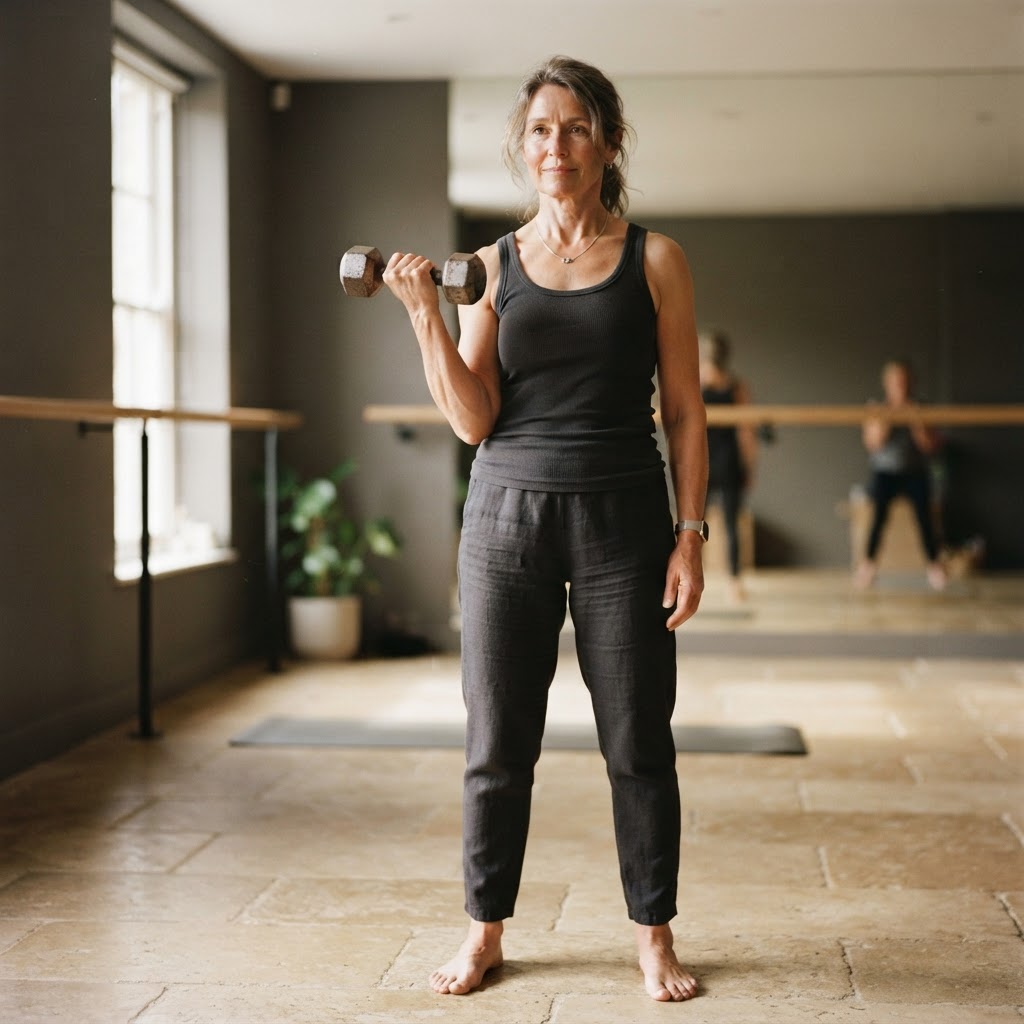
04
My Bones + Strength
Future you lives in the body you are building now.
Bone.
Muscle.
Strength.
Balance.
They matter.
Especially through midlife.
Not because your body needs to look younger. Because you want it to keep carrying you.
Bone density testing is not automatically required for every woman. Healthy Bones Australia recommends bone-density assessment for women and men over 50 who have osteoporosis risk factors, with testing also considered in younger people when particular risks exist.
Resistance, weight-bearing and balance exercise all have roles in supporting bone health, and progressive resistance training is particularly important for maintaining bone and physical capacity as we age.
Ask:
Do I know my bone-health risks?
Am I protecting muscle as I age?
Am I strong enough for the life I want to keep living?

05
My Screening
Some things are worth checking before they make themselves known.
Cervical
Women and people with a cervix aged 25–74 are generally invited to have a Cervical Screening Test every five years. Eligible participants can choose self-collection or clinician collection.
Breast
BreastScreen Australia offers free mammograms every two years to women over 40, with women aged 50–74 actively invited to participate.
Bowel
Eligible Australians aged 45–74 can participate in the National Bowel Cancer Screening Program every two years. People aged 45–49 can request their first free kit; eligible people aged 50–74 are generally sent kits automatically.
Your screening needs may be different. Symptoms, personal history and family history can change what is appropriate.
Screening is for people without symptoms. If something has changed or is worrying you, speak with a healthcare professional rather than relying on routine screening alone.

06
My Pelvic + Sexual Health
We are allowed to talk about this too.
Pain with sex.
Vaginal dryness.
Vulval itching or pain.
Urinary changes.
Recurrent symptoms.
Pelvic concerns.
Changes in desire.
Changes in response.
You do not have to silently adjust to discomfort because somebody told you it was part of getting older.
These symptoms deserve the same curiosity as anything else happening in your body.
Need more specialised care?
The Papillon Clinic
The Papillon Clinic is a specialised GP service in Orange, NSW. Its women's-health service includes perimenopause and menopause care as well as vulval dermatology and concerns such as chronic itch, vulval pain, undiagnosed lesions and pain with sex. Its menopause care is designed to work alongside a woman's usual GP.

07
Complementary Support
Curious about other approaches? Understand what women explore, what the evidence says, and what to consider before you try something.
You may have more support available than you realise.
Dedicated Medicare items may cover a menopause health assessment. Here's how to ask for one.
From 1 July 2025, dedicated Medicare items were introduced for menopause and perimenopause health assessments.
The current GP item includes an assessment lasting at least 20 minutes and can cover history and symptoms, blood pressure and physical measures, clinically indicated investigations or referrals, discussion of management options, an individual management plan and preventative health advice. Eligibility and rebates should always be confirmed with the practice because MBS fees and individual circumstances can change.
When you book, ask:
“Can I book a menopause or perimenopause health assessment, and am I eligible for the Medicare item?”
Useful next steps.
The three most useful places to go from here. Where to start, what to ask, and what to record.
You don't need one company for everything.
A GP first, menopause-informed care for hormone concerns, specialists for persistent pain.
Different questions require different expertise.
01
Your GP
May be the right starting point.
02
Menopause-informed care
Helps when hormones and midlife symptoms are the central concern.
03
Specialist support
For persistent pelvic, vulval or sexual pain.
A physiotherapist, exercise physiologist or other allied-health practitioner may help with strength, movement, pelvic floor or physical capacity. And sometimes testing is useful.
The test is not the destination. Understanding the result is.
MAMMA MAFIA does not need to see your results.
We do not need to own your health information.
We help you understand where you might go next.
You and your qualified healthcare professionals decide what happens after that.
Two printable tools, together: the questions worth asking, and a private record of what changed. Build your appointment prep in one place.
Doctor Conversation Guide
A printable set of prompts for the conversation, so the important questions don't get lost in a fifteen-minute appointment.
You don't need to walk into a consultation with the diagnosis.
You can walk in with a better story.
What I've noticed
What feels different?
When it started
Was it sudden, gradual or difficult to pinpoint?
My cycle
What has changed?
My sleep
What happens at night, and how do I feel the next day?
My mood + mind
Mood, anxiety, concentration, memory, irritability or sense of self.
My sexual + pelvic wellbeing
Desire, comfort, pain, urinary or vaginal changes.
My body
Weight, strength, muscle, joints or other physical changes.
My family history
Heart disease, osteoporosis, cancers, diabetes, early menopause or anything else relevant.
My medications + supplements
What am I taking now?
My questions
What do I most want to understand before I leave the room?
A record for you. Not a report card.
Fill it in privately, download it, and take what helps into the room with you.
Complete this privately and download it. Take what helps into the room with you.
Walk into your appointment with a clearer story.
Capture what changed, when, and what you want to ask.
Keep a private record of your screening dates.
Take only what helps. Leave the rest.
You do not need to complete this. Add only what feels useful.
Your health information belongs to you
MAMMA MAFIA does not need access to your pathology results, medical reports or treatment decisions for My Body to be useful. Take what helps. Keep your information where you choose.
09. A Quiet Reminder
Your body does not have to become a full-time project.
You do not need to track everything.
Test everything.
Optimise everything.
Or spend your life looking for something to be wrong.
Pay attention.
Know enough to recognise change.
Ask enough to understand your options.
Find qualified people when you need them.
And then go live.
Because the purpose of understanding your body is not to become consumed by it.
It is to feel more at home inside it.
Further reading and directories.
Independent Australian services and directories. Filter by what you need.
These organisations, programs, directories and studies are independent. MAMMA MAFIA does not endorse specific providers, treatments or supplements. Information is for education and navigation only. External links may change. Please verify current details.
Menopause & midlife
Independent resourceAustralasian Menopause Society
Practitioner directory, information sheets and practitioner toolkit.
Last reviewed: Sep 2025
Menopause & midlife
Independent resourceJean Hailes for Women's Health
Fact sheets, symptom checklist and talking-to-your-doctor guides.
Last reviewed: Sep 2025
Menopause & midlife
Independent resourceWellFemme
Australia-wide telehealth menopause clinic that works alongside a usual GP.
Last reviewed: Sep 2025
Menopause & midlife
Independent resourceMenoConnect
Australia-wide directory of menopause-informed medical and allied-health practitioners.
Last reviewed: Sep 2025
Menopause & midlife
Independent resourceThe Papillon Clinic
Specialised GP women's-health service in Orange, NSW.
Last reviewed: Sep 2025
Heart health
Independent resourceHeart Foundation
Heart Health Check information and women's cardiovascular risk resources.
Last reviewed: Sep 2025
Bones & strength
Independent resourceHealthy Bones Australia
Osteoporosis and fracture prevention guidance, exercise recommendations and bone-health information.
Last reviewed: Sep 2025
Bones & nutrition
Independent resourceCSIRO
Australian research and education on protein and midlife nutrition.
Last reviewed: Sep 2025
Screening
Independent resourceNational Cervical Screening Program
Cervical screening information and self-collection guidance.
Last reviewed: Sep 2025
Screening
Independent resourceBreastScreen Australia
National breast screening program.
Last reviewed: Sep 2025
Screening
Independent resourceNational Bowel Cancer Screening Program
National bowel screening information and kits.
Last reviewed: Sep 2025
Medicare
Independent resourceMBS Item 695
Official Medicare Benefits Schedule information for menopause health assessments.
Last reviewed: Sep 2025
Allied health
Independent resourceDietitians Australia
Find an Accredited Practising Dietitian.
Last reviewed: Sep 2025
Allied health
Independent resourceESSA
Find an Accredited Exercise Physiologist.
Last reviewed: Sep 2025
Allied health
Independent resourceThe Mama Physio
National pelvic-health physiotherapy directory.
Last reviewed: Sep 2025
Allied health
Independent resourceContinence Health Australia
Continence and pelvic-health information and directories.
Last reviewed: Sep 2025
Mind & sleep
Independent resourceThe Menopause Society / NAMS
Non-hormone therapy position statements and menopause information.
Last reviewed: Sep 2025
Mind & sleep
Independent resourceSleep Health Foundation
CBT-I resources and sleep information.
Last reviewed: Sep 2025